Lume cube panel mini (review)
As an Amazon Associate, I earn from qualifying purchases.
Good lighting can make a bigger difference to video quality than upgrading your camera, but carrying a full-size LED panel everywhere isn’t always practical. That is exactly the problem the Lume Cube Panel Mini is designed to solve.
Table of Contents
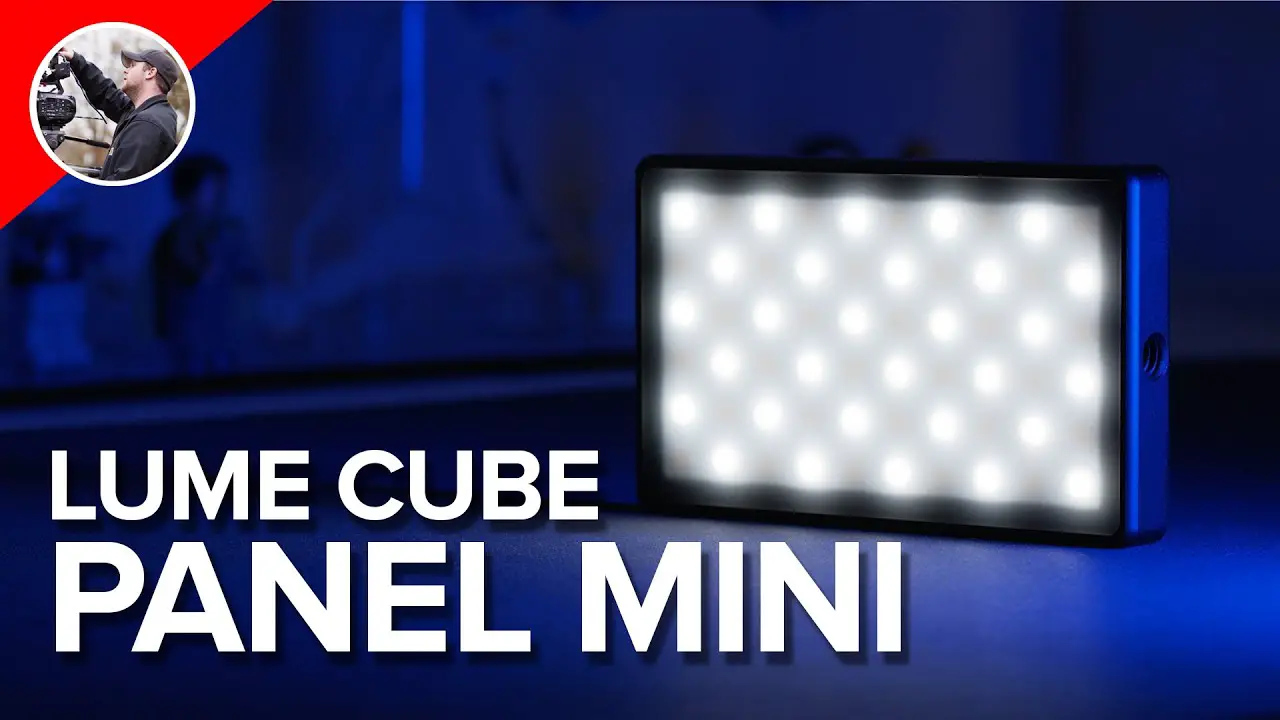
The Panel Mini is an ultra-compact, battery-powered bi-color LED light aimed at photographers, vloggers, filmmakers, streamers, and other content creators. It is roughly the size of a credit card, yet it offers adjustable brightness, variable color temperature, a high CRI rating, an LCD display, and several mounting options.
But how useful is such a small light in practice, and is the Lume Cube Panel Mini still worth buying? This guide covers its specifications, features, performance, battery life, advantages, drawbacks, and ideal uses.
Lume Cube Panel Mini Overview
The Lume Cube Panel Mini sits in the category of pocket-sized LED video lights. Instead of trying to replace a studio light, it is designed to provide convenient illumination when you’re shooting close to your subject.
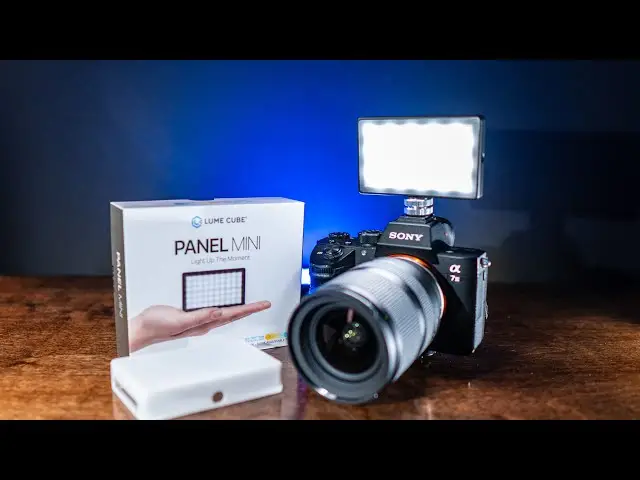
It can be mounted directly on a camera, attached to a tripod or lighting rig, or simply held in your hand. Its small dimensions also mean it can stay permanently in a camera bag without taking up much space.
The current Lume Cube product page lists the Panel Mini at $69.99.
Its biggest selling points are portability and simplicity. There are no complicated menus or dozens of lighting effects. You essentially choose the brightness and desired white balance and start shooting.
Key Specifications
According to Lume Cube’s current specifications, the Panel Mini offers:
| Specification | Lume Cube Panel Mini |
|---|---|
| LEDs | 60 |
| Maximum output | 300 lumens |
| Maximum illuminance | 550 lux at 0.5 m |
| CRI | 96+ |
| Brightness | Adjustable |
| Color temperature | 2700K–7500K on current specification |
| Dimensions | 3.6 × 2.18 × 0.43 inches |
| Battery | Internal rechargeable lithium battery |
| Runtime at 100% | Around 1.5 hours |
| Runtime at 50% | Up to around 3 hours |
| Display | Rear LCD |
| Diffuser | Silicone diffuser included |
| Camera mount | Mini shoe mount included |
There is an important specification difference worth mentioning. Earlier versions and documentation for the Panel Mini list a 3200K–5600K color-temperature range and roughly 1.2 hours of runtime at maximum brightness. B&H continues to list those specifications for model LC-PANELMINI1.
Therefore, buyers should check the specifications of the exact version being sold by their retailer rather than assuming every Panel Mini has identical specifications.
Design and Build Quality
One of the Panel Mini’s strongest features is simply how small it is.
At approximately 3.6 inches wide and only 0.43 inches thick, it is small enough to slip into a pocket or an accessory compartment in a camera bag.
Despite the compact dimensions, it doesn’t feel like a disposable plastic accessory. The Panel Mini uses an aluminum housing, which gives it a more substantial and professional feel than many inexpensive miniature LED lights.
This combination of a thin profile and durable housing makes it particularly attractive for travel.
You can realistically keep one in your camera bag all the time.
Light Output
The Panel Mini contains 60 LEDs and produces up to 300 lumens, with Lume Cube rating the output at approximately 550 lux from 0.5 meters.
Those numbers reveal both the biggest strength and biggest limitation of the light.
At short distances, it is surprisingly effective.
For example, it can work well for:
- illuminating someone’s face while vlogging;
- adding fill light during an interview;
- photographing small products;
- food photography;
- tabletop videos;
- adding catchlights to eyes;
- illuminating objects for macro photography;
- providing emergency fill light outdoors.
Independent testing has similarly found its output best suited to tabletop photography and close-up video rather than lighting subjects from substantial distances.
That distinction is important.
The Panel Mini is powerful for its size, but it isn’t a miniature replacement for a 60W or 100W COB video light.
Move it several meters away from your subject and its usefulness drops dramatically.
Color Accuracy
Brightness isn’t everything when choosing a video light.
Poor-quality LEDs can introduce unwanted green or magenta casts and make skin tones difficult to correct in post-production.
The Panel Mini has a rated CRI of 96+, which is excellent for a light in this category.
CRI, or Color Rendering Index, measures how accurately a light source reproduces colors compared with a reference source.
A rating above 90 is generally considered good for photography and video, while 95+ is particularly desirable when accurate skin tones or product colors matter.
For everyday content creation, the Panel Mini’s color reproduction is one of its major advantages over extremely cheap pocket LEDs.
Adjustable Color Temperature
Another useful feature is adjustable white balance.
Instead of carrying separate tungsten and daylight lights, you can change the Panel Mini’s color temperature to better match the environment.
Warmer settings work well around traditional indoor lighting, while cooler settings are useful for daylight or modern LED-lit environments.
This is particularly valuable when using the Panel Mini as a fill light.
For example, if you’re recording inside a room illuminated by warm lamps, using a fixed 5600K daylight LED could produce an obvious blue-looking fill light. Adjusting the Panel Mini toward the warmer end of its range creates a much more natural result.
Brightness Control
Brightness is also adjustable rather than simply offering a low/high switch.
Earlier Panel Mini documentation specifies adjustment from 1% to 100%, allowing substantially more control over the amount of fill light hitting your subject.
This matters because miniature LED panels are frequently used close to people’s faces.
At 100% brightness from a short distance, the light may be unnecessarily strong. Lowering the output allows you to create subtle fill without completely changing the exposure of the scene.
Lower brightness also dramatically improves battery life.
LCD Display
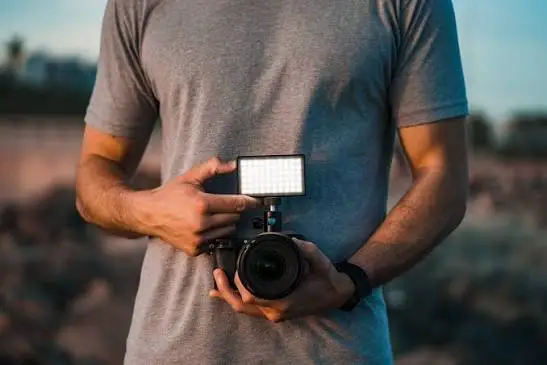
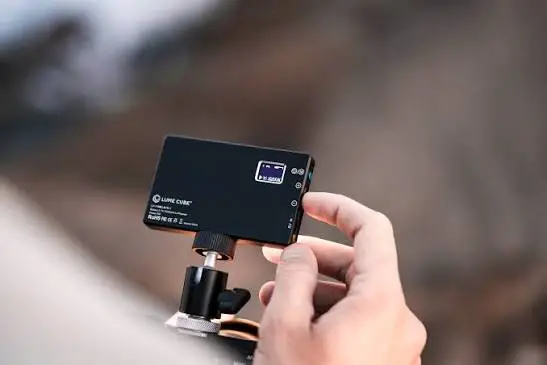
The rear LCD is one of the Panel Mini’s best practical features.
Instead of relying on several LEDs to approximate battery level, the display provides useful information about the light’s settings and remaining power.
Depending on the version, the display shows information including:
- brightness;
- color temperature;
- battery status;
- estimated remaining runtime.
The estimated runtime feature is particularly useful during filming.
If you’re preparing for a 45-minute interview and the display estimates only 20 minutes of battery life at the current brightness, you immediately know that you need to lower the output or connect external power.
That’s considerably more useful than discovering halfway through the interview that your light has died.
Diffusion
Small LED lights can create harsh shadows because the physical light source is so small.
Lume Cube addresses this in two ways.
First, the Panel Mini has built-in diffusion over the LEDs. Second, a removable silicone softening diffuser is included in the package.
The additional diffuser reduces harshness further and is particularly useful when the light is positioned close to a person’s face.
However, basic physics still applies.
A credit-card-sized light source cannot become as soft as a large softbox. If you’re shooting professional interviews or portraits, a larger diffused light will produce more flattering results.
The Panel Mini’s diffuser simply makes a very small light considerably more usable.
Battery Life
Battery performance depends heavily on brightness.
Lume Cube’s current specifications claim approximately 1.5 hours at 100% power and up to 3 hours at 50% power.
Older documentation rated the original configuration at roughly 1.2 hours at maximum brightness, while independent testing has reported approximately 80 minutes at full power and around 140 minutes at half power.
That’s respectable considering the Panel Mini’s tiny dimensions.
For short videos, photography sessions, Zoom calls, or occasional fill lighting, battery life shouldn’t be a major concern.
Long interviews and events are another matter.
Fortunately, the Panel Mini can operate while connected to external power. Lume Cube’s tutorial specifically notes that it can be connected to a power bank for extended operation.
That makes a USB power bank a useful accessory for anyone planning long shoots.
Mounting Options
Portability wouldn’t matter much if the light were difficult to position.
The Panel Mini provides 1/4″-20 mounting points and comes with a mini shoe mount, allowing it to attach directly to many cameras and rigs. B&H lists mounting threads on both the bottom and side, enabling horizontal or vertical mounting.
That gives you several possibilities.
You can mount it:
- above a mirrorless or DSLR camera;
- on a small tripod;
- on a light stand with an appropriate adapter;
- on a camera cage;
- vertically or horizontally on compatible accessories.
You can also simply hold it.
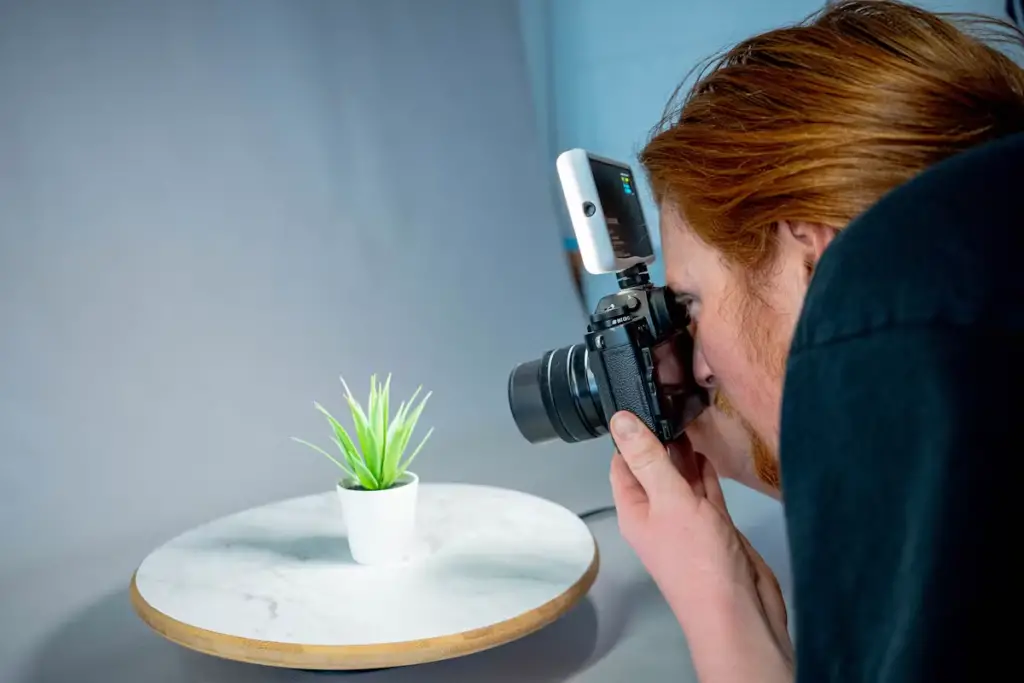
For product and macro photography, hand-holding the Panel Mini can actually be extremely useful because you can quickly move the light around your subject to experiment with reflections and shadows.
Using the Panel Mini for Vlogging
Vlogging is arguably one of the best applications for this light.
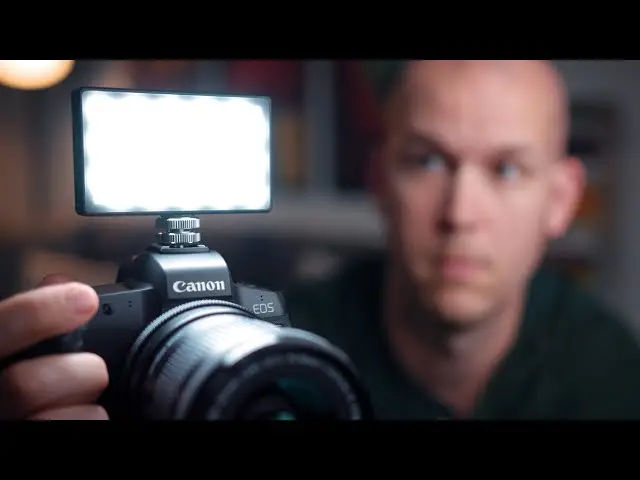
Mount it on top of a camera, adjust the color temperature to match your surroundings, and use relatively low-to-medium brightness as fill.
The Panel Mini can help when recording in restaurants, hotel rooms, vehicles, streets at night, or poorly illuminated interiors.
Because it sits close to the person filming, it doesn’t need enormous output.
The diffuser is worth using for close-up shots because it makes the light more comfortable to look toward and slightly softens facial shadows.
Using It for Photography
Photographers can use the Panel Mini as more than just a video light.
Its continuous output means you can see exactly how the light affects the subject before taking the photograph.
It works particularly well for:
Product photography: Move the panel around small objects to create highlights or illuminate labels.
Macro photography: Its small size allows the light to fit close to subjects where conventional lights may be awkward.
Food photography: Use it to add directional light to plates and ingredients.
Portrait fill: Place it relatively close to the subject to reduce shadows.
Night photography: It can illuminate foreground objects or assist with creative light painting.
It isn’t a substitute for a powerful flash, but it can be a surprisingly useful tool to keep in a photography bag.
Controls and Ease of Use
The controls are deliberately straightforward.
On the original Panel Mini, holding the power button turns the light on. A short press switches between brightness and color-temperature controls, while the adjustment control changes the selected value.
There isn’t much of a learning curve.
That’s arguably a benefit compared with modern RGB lights packed with apps, Bluetooth connectivity, effects, groups, scenes, and menus.
If all you want is good-quality white light, the Panel Mini gets you there quickly.
What Comes in the Box?
Lume Cube currently includes:
- Panel Mini LED light;
- silicone softening diffuser;
- DSLR mini shoe mount;
- USB charging cable.
The included diffuser and camera mount are particularly welcome because they’re accessories most users would otherwise need to purchase separately.
What the Lume Cube Panel Mini Does Well
The strongest aspect of the Panel Mini is the balance between size, light quality, and usability.
The 96+ CRI rating provides good color reproduction, while variable white balance allows it to blend with different lighting environments.
The LCD screen is another standout feature. Knowing your brightness, color temperature, and approximate remaining battery life is much more convenient than guessing.
Then there is portability.
You can own more powerful LED lights, but those lights don’t help if they’re sitting at home because you didn’t want to carry them.
The Panel Mini is small enough that there’s little reason to leave it behind.
Where It Falls Short
The most obvious limitation is output.
At 550 lux from half a meter, this is fundamentally a close-range light.
It isn’t designed to illuminate a full room, overpower bright sunlight, or serve as the primary key light for a large set.
Battery life at maximum output is another consideration. Around 1–1.5 hours is reasonable for something this small, but event shooters may need external power.
The Panel Mini also lacks the advanced creative features available on newer RGB lights.
There are no millions of RGB colors, elaborate lighting effects, or extensive app controls. For some creators that’s a disadvantage; for others, its simplicity is exactly the appeal.
Pros and Cons

Pros
- Extremely compact design
Lightweight and travel friendly
Strong output relative to its size
96+ CRI for accurate colors
Adjustable brightness
Adjustable color temperature
Useful LCD screen
Remaining-runtime indication
Built-in rechargeable battery
Can operate from external USB power
Built-in diffusion
Additional silicone diffuser included
Multiple mounting possibilities
Camera shoe mount included
Simple controls

Cons
- Limited range because of its small size
Relatively short runtime at maximum brightness
Cannot replace a full-size key light
Small source still produces harder light than a large softbox
No RGB lighting
Limited creative effects compared with newer RGB panels
There are cheaper pocket LED lights available
Who Should Buy the Lume Cube Panel Mini?
The Panel Mini makes the most sense for creators who prioritize portability.
It is particularly suitable for YouTubers, vloggers, photographers, travel creators, mobile filmmakers, product photographers, and videographers who want an emergency fill light in their camera bag.
It’s also a good secondary light for someone who already owns larger studio lighting.
For example, you could use a large softbox as your main light while placing the Panel Mini behind your subject as a hair light or using it to illuminate part of the background.
Who Should Skip It?
You should probably consider something larger if you’re primarily shooting studio interviews, full-body portraits, large products, or wide scenes.
The same applies if you regularly need to compete with strong daylight.
In those situations, light output and modifier size matter more than portability, and a larger COB or LED panel will be a much better investment.
Creators primarily interested in colorful backgrounds and special effects may also prefer a modern RGB pocket light.
Lume Cube Panel Mini vs. Larger LED Lights
Choosing between a pocket panel and a larger video light comes down to the shooting situation.
A larger light generally provides:
- more brightness;
- longer effective range;
- larger batteries;
- better compatibility with softboxes and modifiers;
- softer potential lighting.
The Panel Mini instead provides:
- dramatically better portability;
- easier camera mounting;
- faster setup;
- less weight;
- easier handheld use.
It therefore shouldn’t necessarily be viewed as a competitor to a studio light.
It’s more like a lighting multitool.
Tips for Getting Better Results
Positioning makes an enormous difference with a light this small.
Keep the Panel Mini relatively close to your subject whenever possible. Light intensity falls rapidly as distance increases, so moving the panel from one meter away to half a meter away can make a substantial difference.
For faces, avoid pointing it directly forward from the camera at maximum brightness unless you specifically want a flat look. Moving it slightly above and to one side usually creates more natural facial dimension.
Use the silicone diffuser for portraits and interviews.
For product photography, try removing the additional diffuser when you want stronger reflections or more defined shadows.
Finally, don’t automatically run the light at 100%.
Using 30–60% brightness may provide enough illumination while substantially increasing battery life.
Is the Lume Cube Panel Mini Worth It?
For the right user, yes.
The Panel Mini’s appeal isn’t that it produces enormous amounts of light. Its appeal is that it delivers good-quality, adjustable light from an exceptionally compact package.
The 96+ CRI rating, adjustable white balance, LCD display, rechargeable battery, mounting options, and included diffuser make it significantly more capable than a basic pocket flashlight-style LED.
Its primary weakness is unavoidable: physics limits how much a credit-card-sized light can accomplish.
As long as you understand that limitation, the Panel Mini is an excellent portable fill light rather than a disappointing miniature studio light.
Final Verdict
Rating: 4.5/5
The Lume Cube Panel Mini is a cleverly designed pocket LED that combines portability with genuinely useful photography and video features.
Its compact aluminum body is easy to carry, its 96+ CRI output provides accurate-looking colors, and adjustable brightness and color temperature make it adaptable to many environments. The LCD battery and runtime display is especially useful when shooting away from a power source.
It isn’t powerful enough to replace serious studio lighting, and creators looking for RGB effects will find it fairly basic. But that isn’t really what the Panel Mini is trying to be.
It’s a light you can keep in your camera bag, mount in seconds, and use whenever available light isn’t quite good enough.
For vloggers, photographers, filmmakers, and traveling content creators who value portability above raw power, the Lume Cube Panel Mini remains a very capable little lighting tool.